- Email [email protected]
- Phone +(91) 98202 11163

Forge Fittings
Forge Fittings
Forged fittings are components used to connect pipes, tubes, and other equipment in a piping system. These fittings are created through a forging process, which involves shaping metal using localized compressive forces.
The forging process enhances the strength and mechanical properties of the fittings, making them suitable for high-pressure and high-temperature applications.
Forged fittings are known for their superior strength and durability. The forging process aligns the grain structure of the metal, resulting in a more robust and resilient material compared to cast fittings. Due to their robust nature, forged fittings are well-suited for applications involving high pressure and high temperature. They can withstand more extreme conditions than fittings produced through other methods.
Types of Forge Fittings

SS Forge Fittings
ASTM/ASME A182 - F 202, 304, 304L, 304H, 316, 316Ti, 316H, 316L, 316LN, 309S, 309H, 310S, 310H,317, 317L, 321, 321H, 347, 347H, 904L
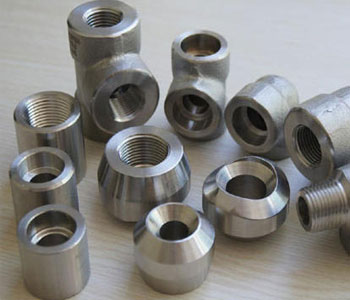
Duplex Steel Forge Fittings
ASTM/ASME A182 - UNS F44, F45, F51, F53, F55, F60, F61 UNS S31803, S32205

Inconel Forge Fittings
ASTM/ASME B564 - 600, 601, 617, 625, 690

Monel Forge Fittings
ASTM/ASME B564 - 400, K500
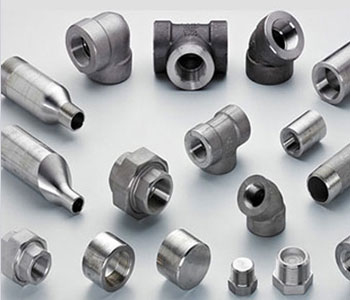
Hastelloy Forge Fittings
ASTM/ASME B564 - C22, C276, B2
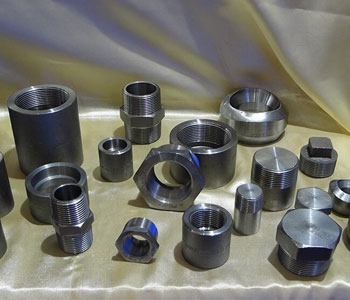
Nickel Alloy Forge Fittings
ASTM/ASME B564 - Nickel 200 (N02200), Nickel 201 (N02201), Nickel 205 (N02205)
We are the most trusted source for Forge Fittings
Specifications of Forge Fittings
| Specifications: | ASTM A182 & ASME SA182 |
|---|---|
| Standard: | ASME 16.11, MSS SP-79, 83, 95, 97, BS 3799 |
| Size | 1/8” NB to 4” NB (Socketweld & Screwed-Threaded) |
| Class | 2000 LBS, 3000 LBS, 6000 LBS, 9000 LBS |
| Type | Socketweld Fittings, Screwed-Threaded Fittings |
Third Party Inspection







Application Industries